
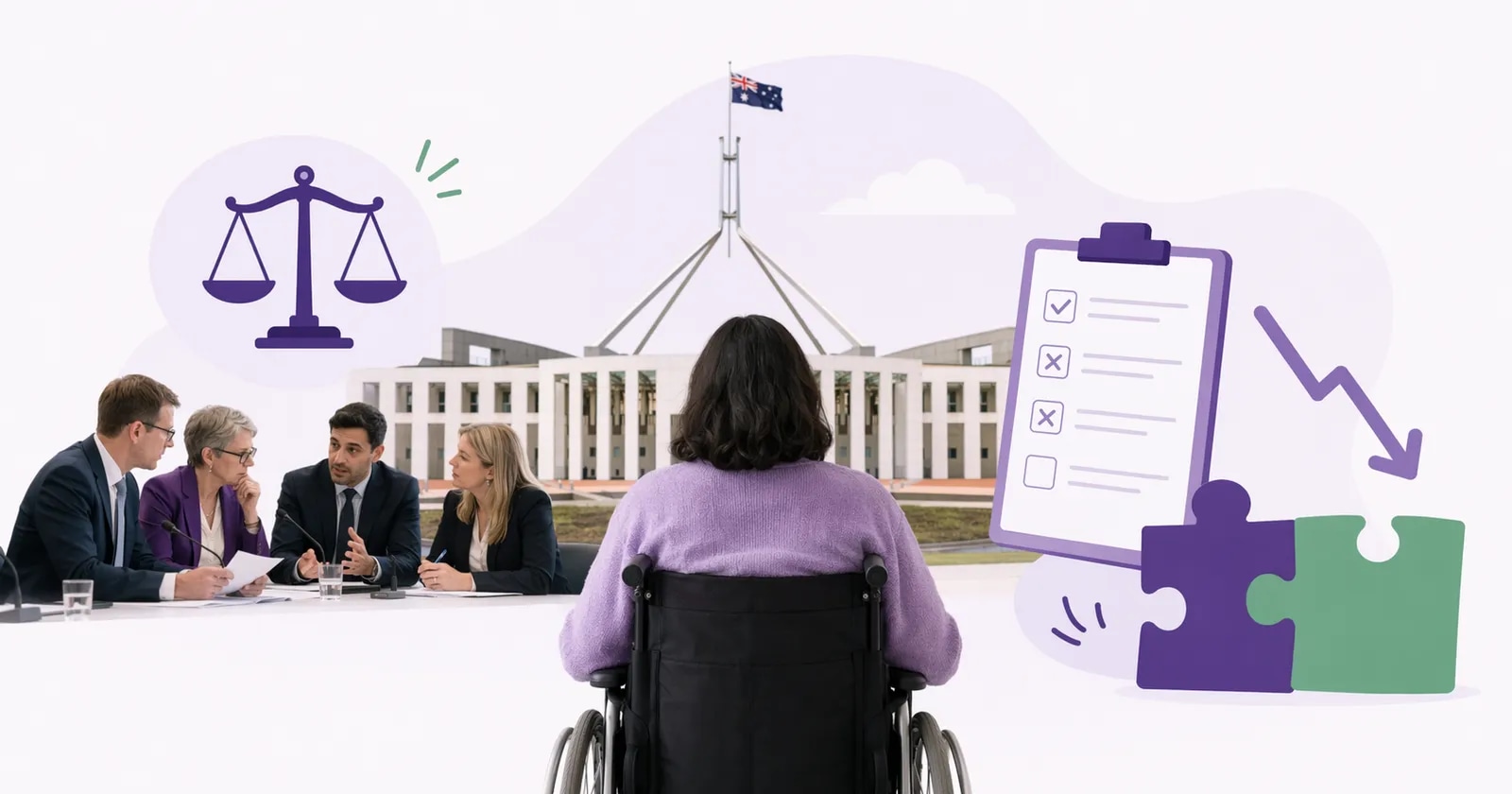
Correction and update — 17 September 2026: We have repaired the June reporting links. The eight-week inquiry extension and “retrogressive” assessment are verified, but came from different processes: the latter was the Parliamentary Joint Committee on Human Rights’ scrutiny report. Historical concerns are retained with precise attribution and the subsequent August outcome is added.
TL;DR
- The NDIS Bill inquiry received an eight-week extension to 14 August 2026 after a Labor–Greens agreement on 23 June [1].
- ABC reported more than 4,000 public submissions in just over a fortnight [1].
- Advocates raised concerns about participant safety, ministerial powers and automated decisions [1][2].
- The Bill subsequently passed Parliament on 19 August and received Royal Assent on 20 August [3].
The June extension
ABC reported on 23 June that disability advocates welcomed an extension to the Senate inquiry after criticism of its short timetable. A Labor–Greens deal extended the reporting deadline until 14 August in exchange for Greens support for tax reform [1].
The inquiry had been scheduled to report on 23 June after two postponements the previous week. An interim report that afternoon recommended passage with additional clarifications and a road map for change [1]. The extension was therefore a documented event, not an inference from later reporting.
A separate human rights committee raised concerns
The Guardian reported on 13 June that the Labor-led Parliamentary Joint Committee on Human Rights had assessed the proposed measures as appearing “retrogressive” and limiting human rights. It also questioned their alignment with the 2023 NDIS Review and whether mainstream supports were available and accessible [5].
That scrutiny report came from a different committee from the Senate Community Affairs inquiry that was later extended. Its assessment of the proposed Bill should not be attributed to every MP or described as a later judgment on the final Act.
What concerns were raised?
ABC reported Coalition concerns about transparency and participant safety, alongside dissenting comments from the Greens and independent senator David Pocock on ministerial powers, automated decisions and disproportionate effects on women [1].
During the 10 June hearing, Disability Discrimination Commissioner Rosemary Kayess warned that isolation and closed environments could increase exposure to violence, abuse and exploitation. Women With Disabilities Australia chief executive Sophie Cusworth also warned that reduced community participation could increase risks for women [2]. These were concerns raised in evidence about proposed changes, not findings that a particular future harm had already occurred.
The government maintained that the NDIS needed a structural reset to remain sustainable [2]. The disagreement concerned both reform objectives and safeguards in implementation.
What happened in August?
The department confirms that the committee's report was tabled on 14 August and recommended passage. Parliament passed the Bill on 19 August; Royal Assent followed on 20 August [3].
That later outcome updates the original article's discussion of what might happen next. It does not erase the June extension or the concerns raised at the time.
Consultation and implementation continue
The official timeline sets separate commencement dates for different measures. Some began on 27 August, while access and planning changes have later dates [4]. It also lists consultation closing dates by topic; not every consultation remains open throughout July–October.
For a current plan question, check the specific measure and the official advice relevant to your circumstances. An inquiry reporting date, Royal Assent date and the date a change affects a participant are not necessarily the same.
FAQ
Q: Was the inquiry extended in June? Yes. ABC reported the 23 June agreement extending it by eight weeks to 14 August [1].
Q: Is the Bill still awaiting passage? No. The department records passage on 19 August and Royal Assent on 20 August 2026 [3].
Q: Did every reform begin with Royal Assent? No. The implementation timeline has distinct dates for individual measures [4].
References
[1] Evan Young and Nas Campanella, ABC News, 23 June 2026. Disability advocates welcome extension after ridiculous and disrespectful NDIS inquiry.
[2] Evan Young and Nas Campanella, ABC News, 10 June 2026. NDIS cuts could create unsafe environments and domestic violence risks, inquiry warned.
[3] Department of Health, Disability and Ageing, updated 4 September 2026. NDIS legislation: passage and Royal Assent.
[4] Department of Health, Disability and Ageing, updated 15 September 2026. NDIS reform implementation timeline.
[5] Sarah Basford Canales, The Guardian, 13 June 2026. NDIS changes retrogressive and out of step with review, MPs say.