Correction and update — 17 September 2026: We have repaired the ABC reference and checked the original reporting. The $1 million case is supported: it concerned personal training billed under the “other professionals” item. We have removed details not established by that report, including claims of undelivered services in this particular case, its ranking among misconduct cases, and unverified debt-recovery and prosecution accounts. September legislative developments are identified separately.
TL;DR
- ABC News reported on 31 July 2026 that a provider was allowed to retain more than $1 million through incorrect billing for personal training [1].
- The provider charged $193.99 an hour, nearly three times the government's recommended price [1].
- NDIA analysis found that 40% of a sample of 10,000 providers billing under the “other professional” item had been paid for services outside the rules [1].
- The findings concern incorrect billing; they do not establish a criminal conviction against every sampled provider.
The $1 million billing case
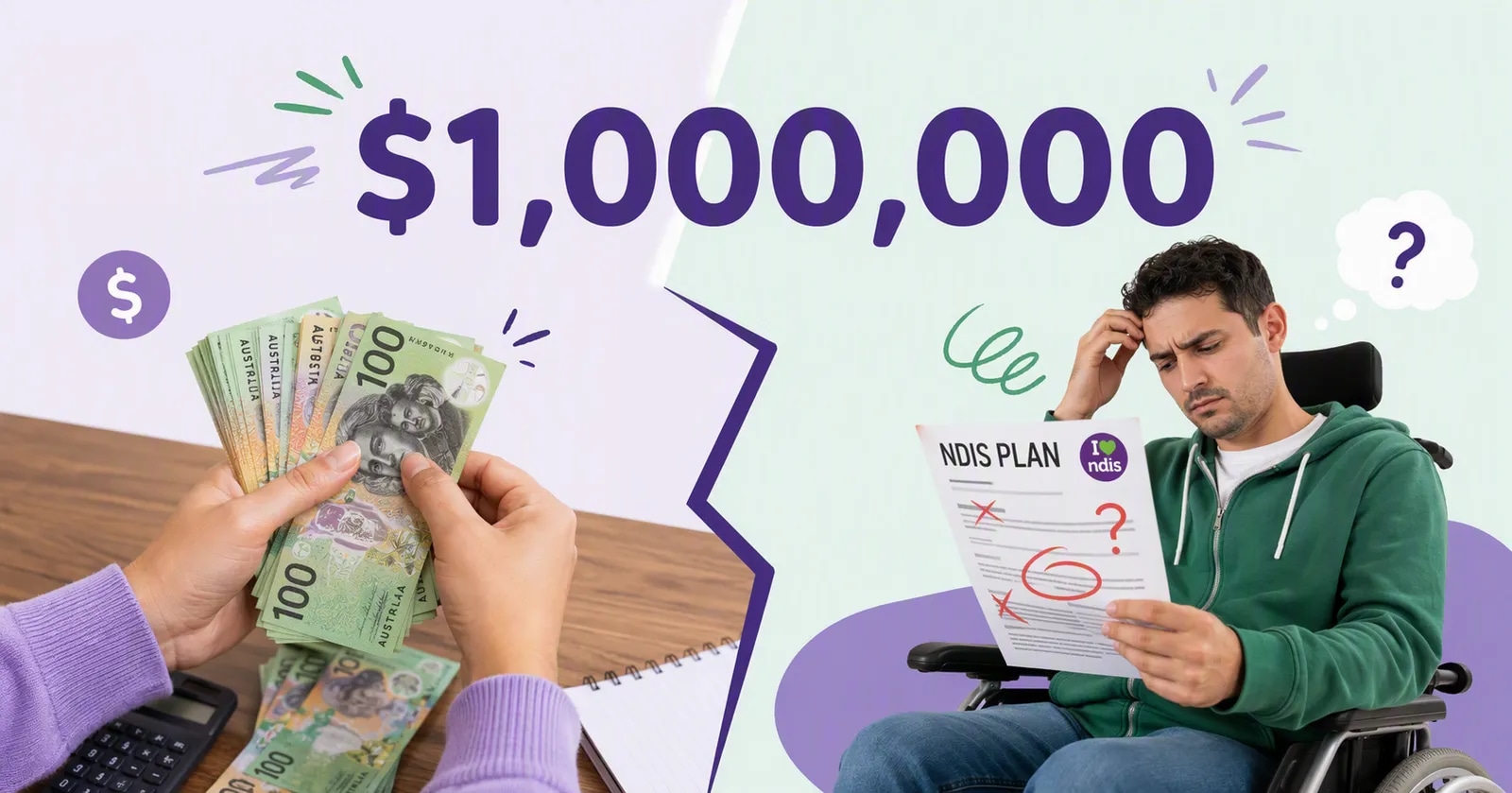
ABC reporters Nas Campanella and Mary Lloyd reported that the federal government had identified a provider allowed to pocket more than $1 million by incorrectly billing for personal training. The article attributed the findings to the government and NDIA analysis [1].
The issue centred on the “other professionals” service category, intended for qualified therapists delivering evidence-based supports. ABC reported claims in that category for activities including decluttering, personal training, golf lessons, float tanks and horse therapy [1].
The article did not name the provider. It also did not establish that the particular personal-training services were never delivered, that a criminal court had found fraud, or that this was one of the largest misconduct cases. Those additions have been removed from our account.
What the sample shows
According to ABC, 40% of the 10,000 providers sampled under that billing item had been paid for services not permitted by NDIS rules. ABC said the NDIA had explicitly banned billing for general fitness, recreational activities and animal therapy in 2024 [1].
The sample concerned providers using that particular item. Its 40% result must not be represented as the fraud rate among all NDIS providers or all claims. Incorrect charging and proven criminal fraud are different findings.
The government's response
ABC reported that NDIS minister Jenny McAllister said the agency had raised debts against some providers and referred others to the Australian Competition and Consumer Commission. The government described smaller, more specific billing categories introduced in July and a reduction in the “other professional” price cap from $194 to $156 [1].
The article also reported the government's $350 million budget investment in a new digital payment system and proposed new investigation and enforcement powers. McAllister said:
“Every dollar that goes somewhere else is a dollar wasted” [1].
Those are the actions and statements reported in July. The department subsequently confirmed that the reform Bill passed Parliament on 19 August and received Royal Assent on 20 August 2026 [2]. This later passage should not be confused with the legislation's status when ABC published the billing story.
Checking an invoice and reporting concerns
Keep invoices, service agreements and records of support received. If a charge appears wrong, ask the provider or your plan manager to explain the item and rate in writing. Raising a concern directly may resolve some issues if you feel comfortable doing so [3].
The NDIS Commission accepts reports about suspected misuse of funds, unfair prices, missing supports and provider conduct. It says individual dispute resolution is outside its role, so a report does not guarantee a refund. Questions about plan funding or NDIA decisions belong with the NDIA [3].
The AFP directs suspected NDIS fraud reports to 1800 650 717, fraudreporting@ndis.gov.au or the NDIA online fraud reporting form [4]. Report the information you have; do not assume an unfamiliar charge alone proves fraud.
FAQ
Q: Is the $1 million report supported by an identifiable source? Yes. ABC's 31 July article reports that the government identified a provider allowed to pocket more than $1 million through incorrect personal-training billing [1].
Q: Does the 40% figure apply to all providers? No. It describes the sampled providers who billed under the “other professional” item [1].
Q: Does making a complaint guarantee repayment? No. The Commission explains that it does not provide individual dispute resolution. Ask it or the NDIA about the appropriate process for your circumstances [3].
References
[1] Nas Campanella and Mary Lloyd, ABC News, 31 July 2026. 4,000 NDIS service providers profiting from incorrect billing practices.
[2] Department of Health, Disability and Ageing, updated 4 September 2026. NDIS legislation: passage and Royal Assent.
[3] NDIS Quality and Safeguards Commission, accessed 17 September 2026. Report an issue or make a complaint about a provider or worker.
[4] Australian Federal Police and partner agencies, 10 June 2026. SA woman charged over alleged $5 million dishonesty plot against NDIS.